Case study 02Pitch
Sweep
Waste pickup a Lagos resident can plan around.
- Role
- Pitch and deck
- Timeline
- April to July 2026
- Platform
- Mobile web app
- Field
- Civic services
- Team
- Two of us. My co-founder wrote the code.
In Lagos, a missed bin pickup has nowhere to go and a payment brings no instant receipt. Sweep puts the pickup day, the report and the payment in one phone app. My co-founder and I pitched it to the state's waste agency in July 2026.
The short version
BeforeWhen the truck did not come, a resident had no one clear to tell and no record of telling.
AfterOne report with the phone's location and a pin to drag, kept in one activity list with a status.
BeforeBills had no easy check, and a payment brought no instant receipt.
AfterThe balance and one Pay All button come first, and the server checks each payment before a bill is marked paid.
BeforeA live truck map we had no data to back.
AfterThe map kept, labelled a simulated preview in the app, on the slide and in the presenter notes.
- My part
- Pitch and deck, with my co-founder. I co-presented the pitch and worked on the deck.
- Outcome Not measured yet
- Pitched in July 2026. There is no contract yet, so nothing has been measured. I would measure missed pickups reported and resolved per week.
Calls I made
- 01
Say the truck map is simulated before anyone asks.
In the app, on the pitch slide and in our presenter notes, which say that volunteering the caveat earns more trust than the feature.
- 02
Show the agency's admin platform as a roadmap, never as built.
It existed only as a design prototype, so the deck marks it as phase two.
- 03
A web app that installs to the home screen, not a store app.
Data costs money in Lagos, and a 40 megabyte download is a reason to say no.
- 04
Rework the pitch's ask between the 3 and 6 July drafts.
The budget split into phases, and the plan widened from 20 local government areas to all 57 council areas.
The app, screen by screen
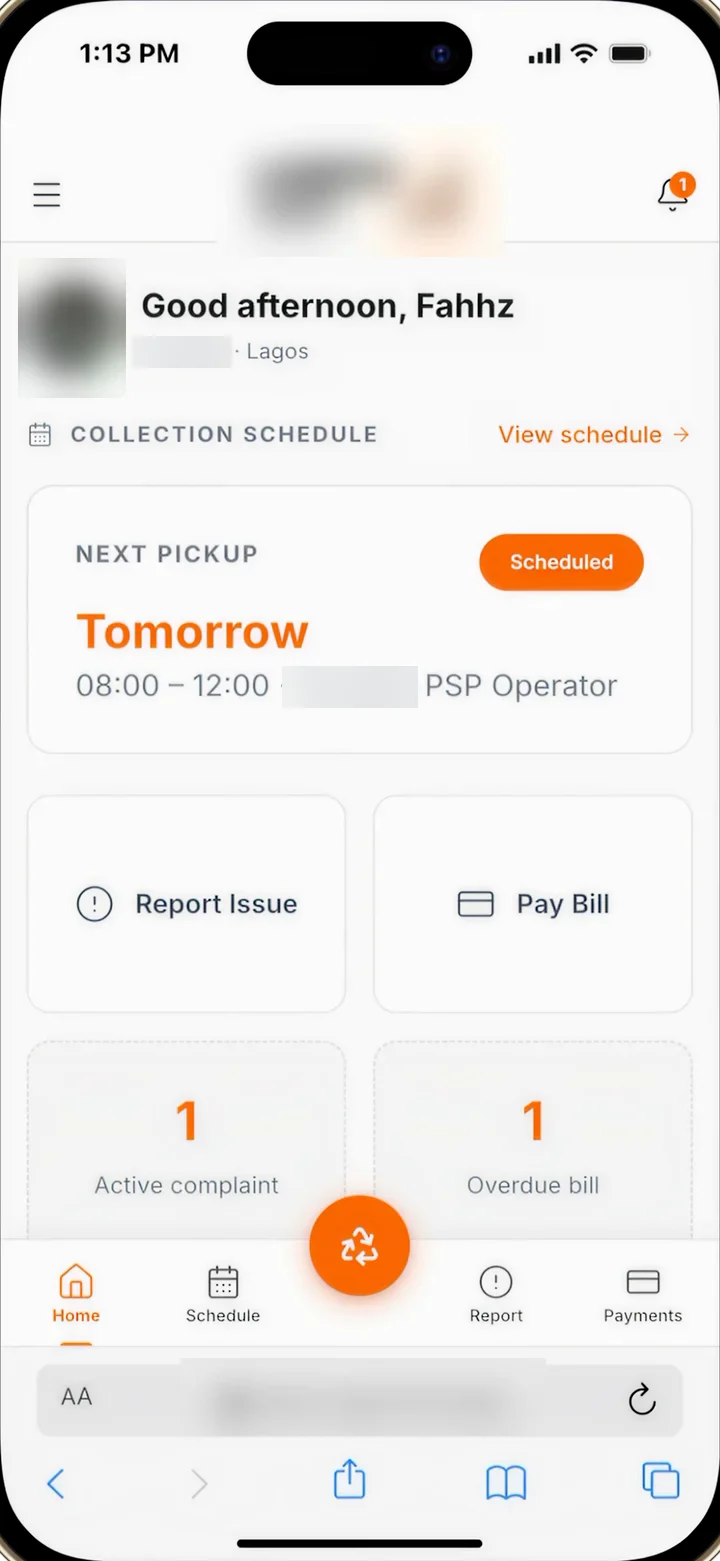
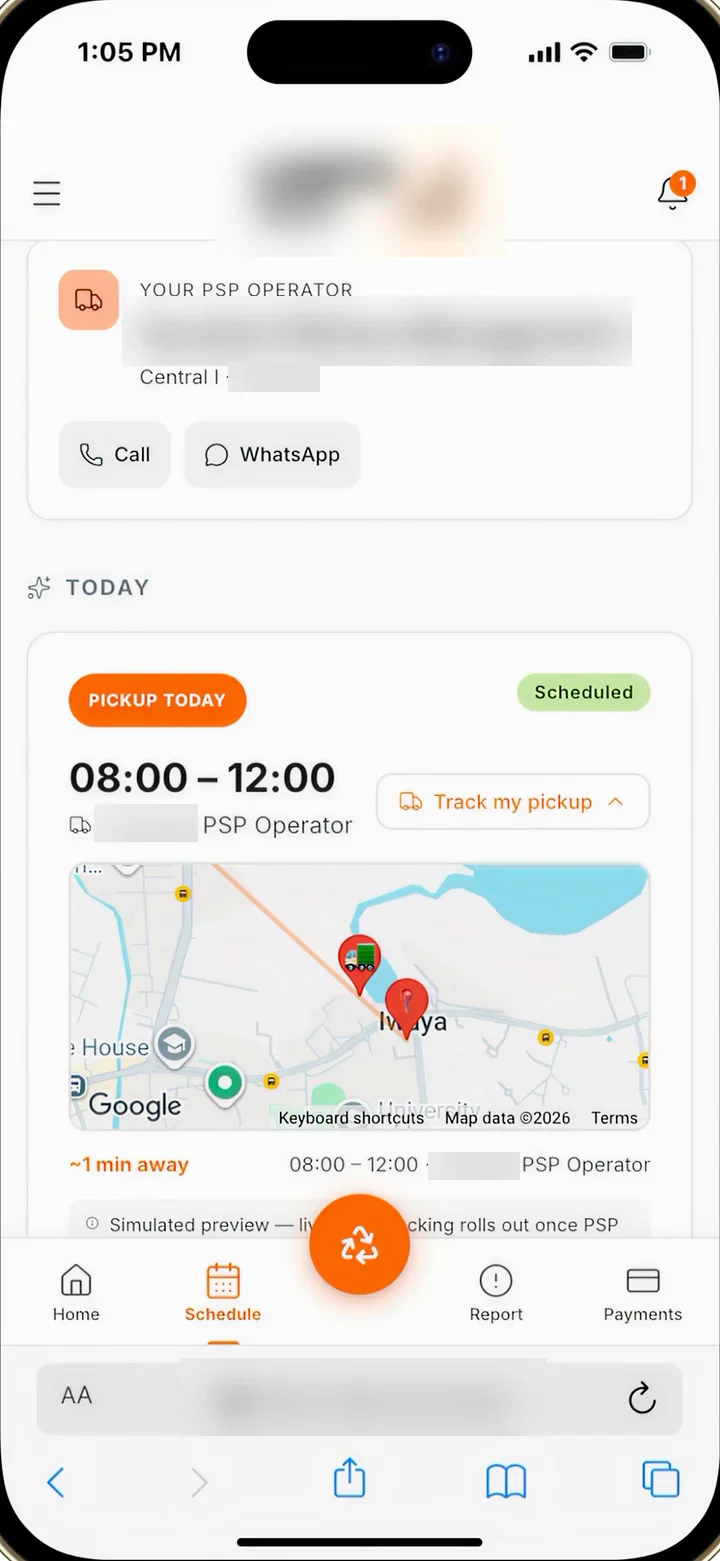
Eight real screens from the design file, in the order a resident meets them. The agency's logo, the web address, names, addresses and the map labels are blurred.
01Home
02Schedule
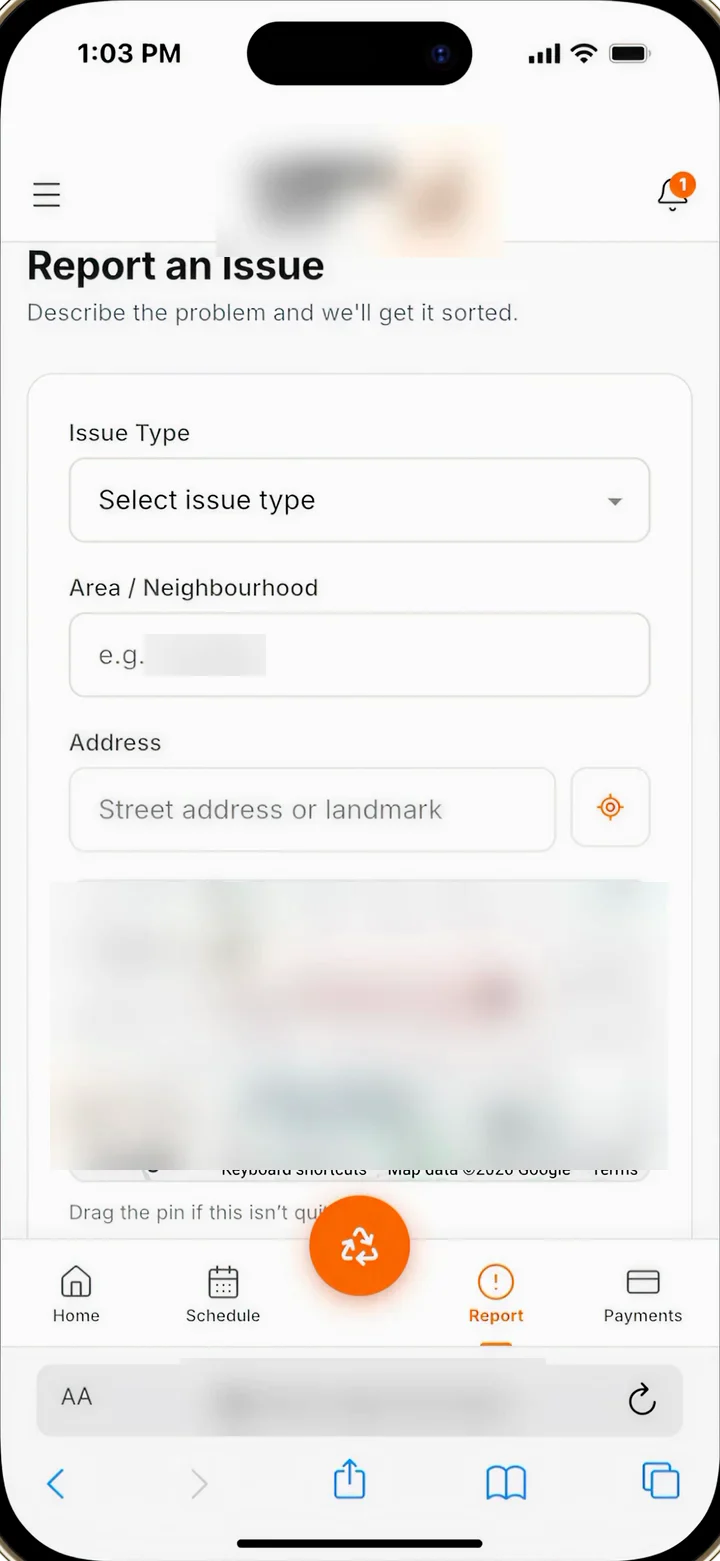
03Report
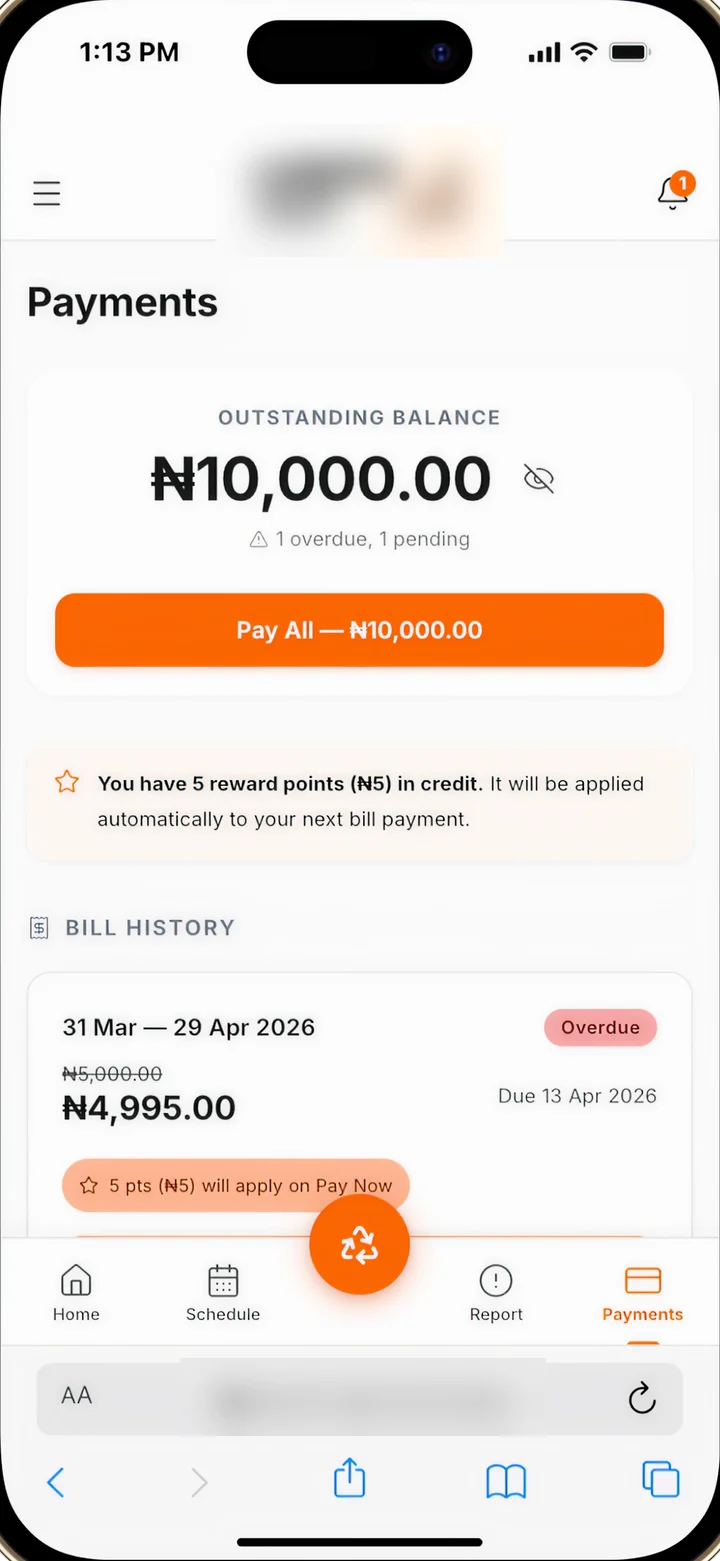
04Payments
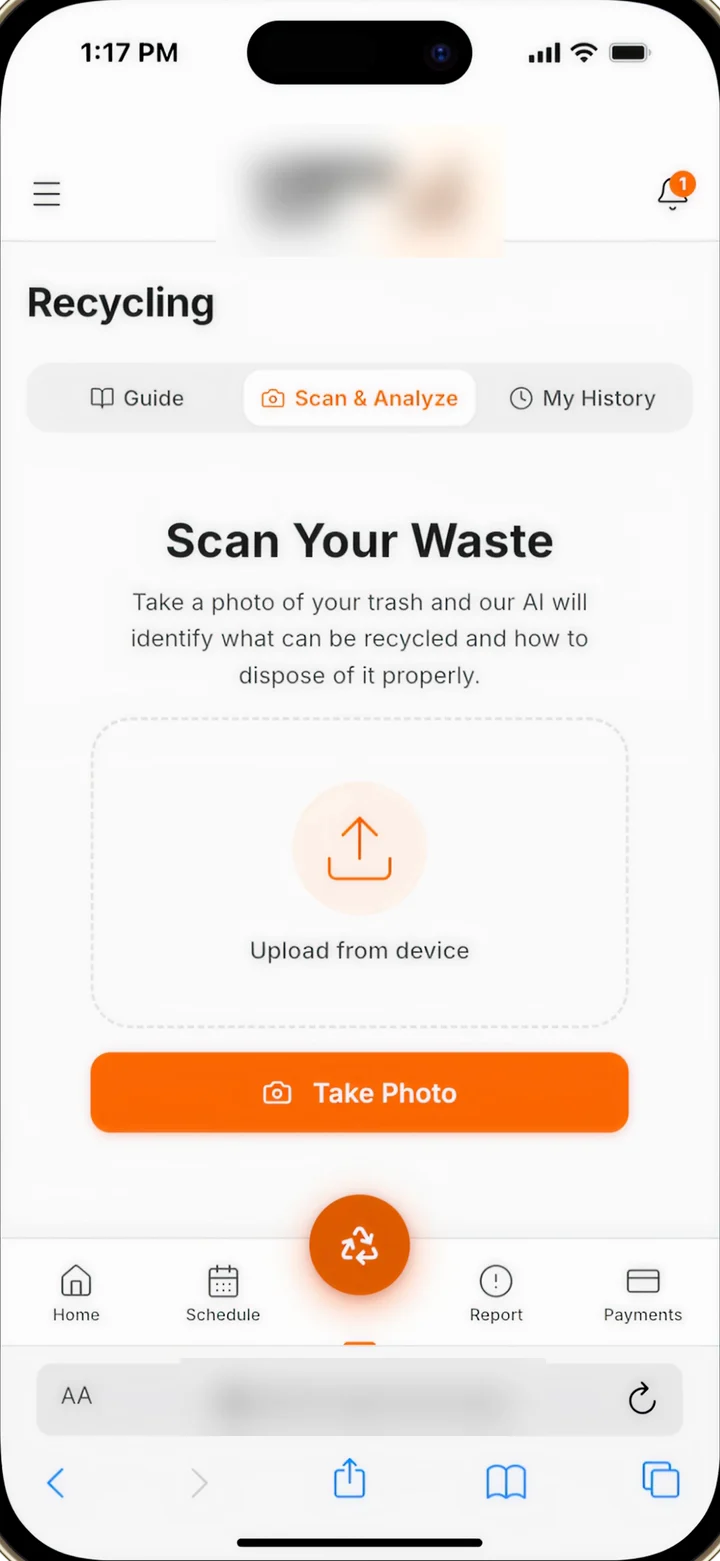
05Scan
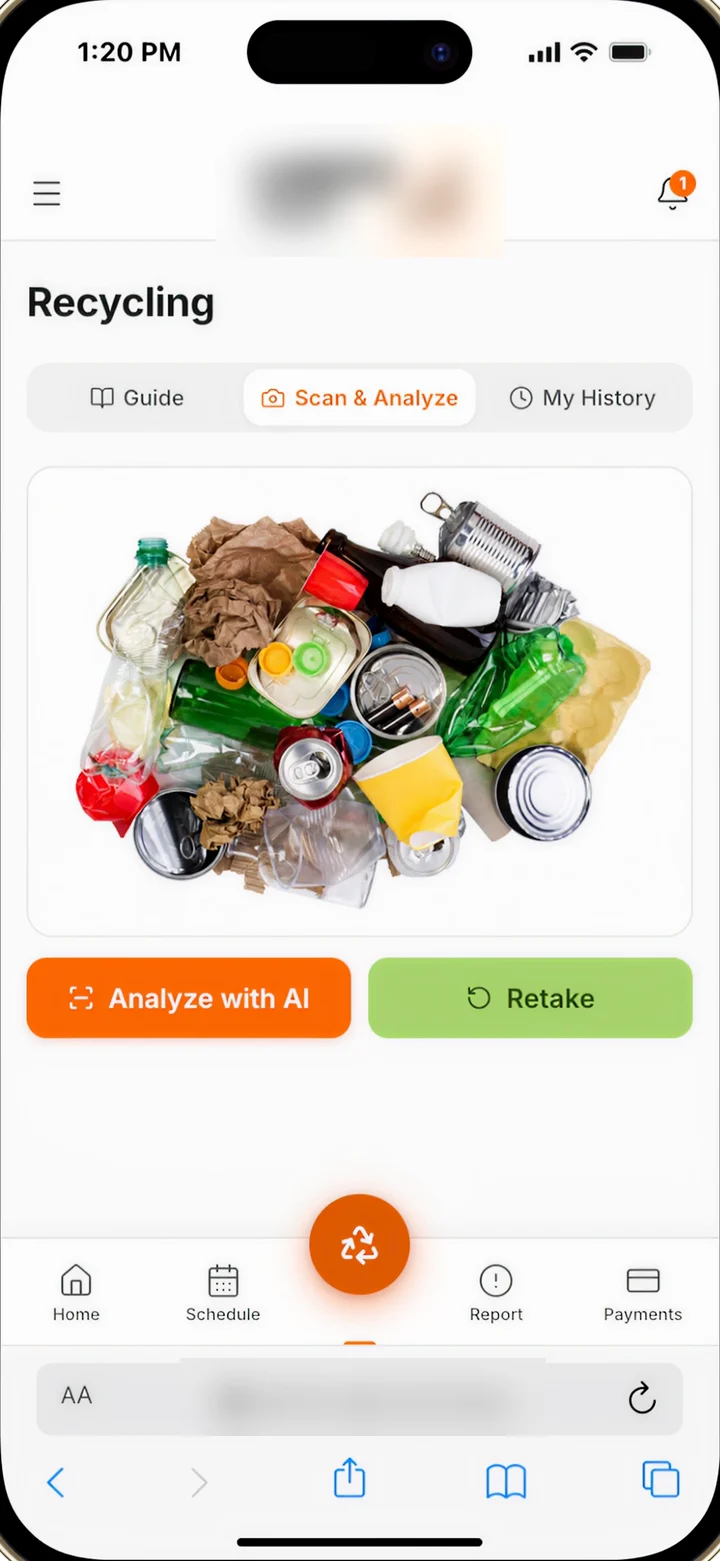
06Recycling
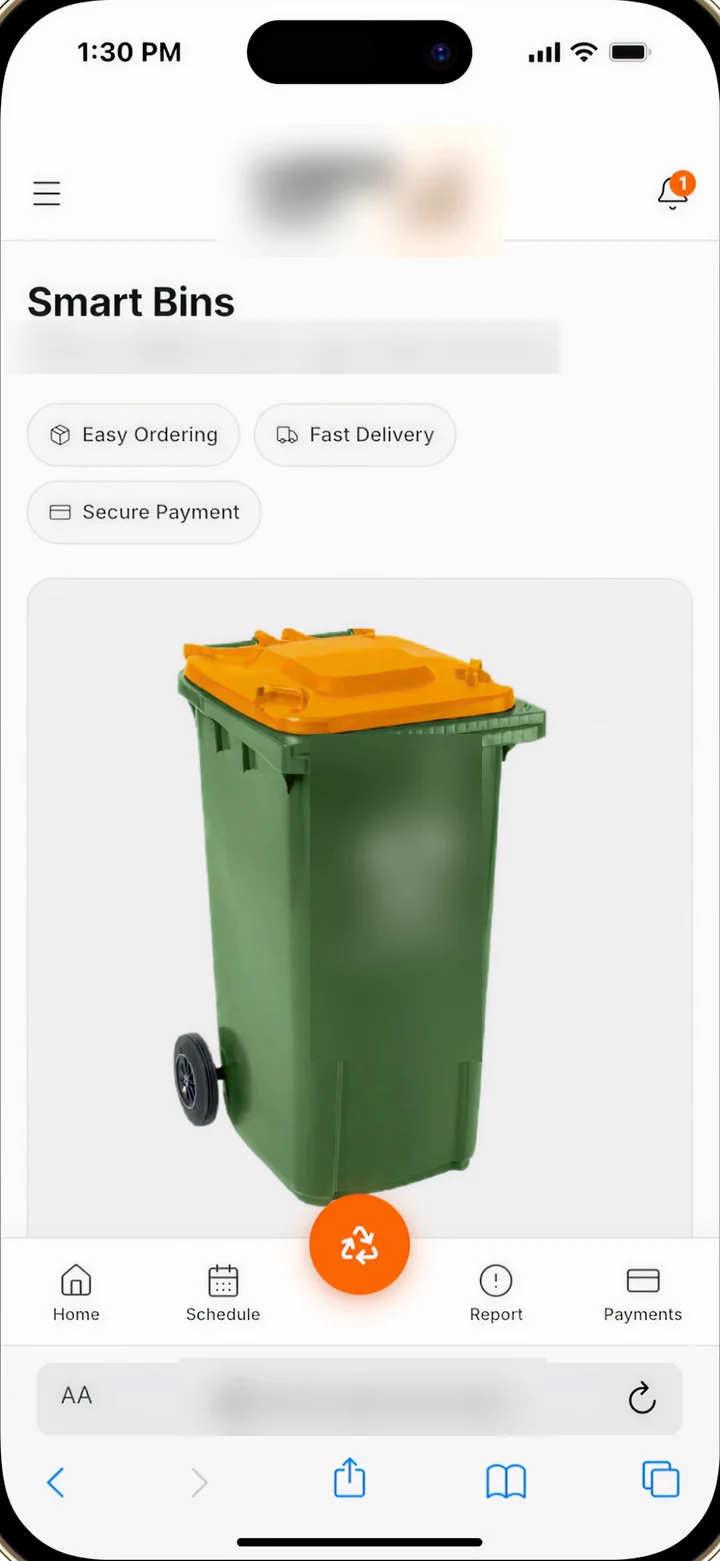
07Smart bins
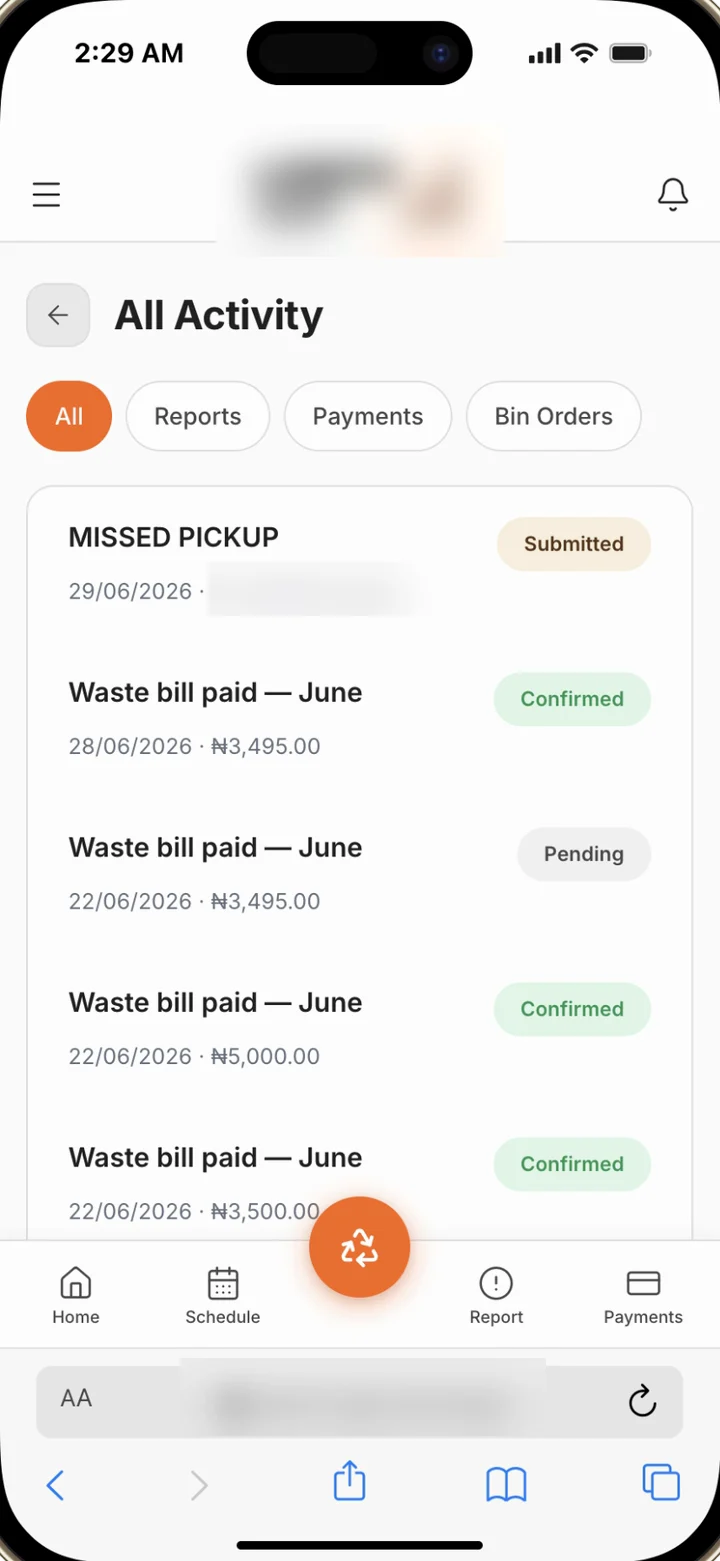
08Activity
A missed pickup has nowhere to go.
In Lagos, each street is served by a private waste operator. When the truck does not come, a resident has no clear person to tell and no record that they told anyone. Bills arrive with no easy way to check them, and a payment brings no instant receipt. The waste agency, for its part, has no live picture of which streets were missed.
Our plan for Sweep: one phone app that answers three questions for a resident. When is my pickup? Who do I tell when it is missed? Have I paid?
Where we started: no contract, just a demo.
Sweep was never a client project. We wrote the plan in May, built a working app in June, and at the end of June showed it to someone who could introduce us to the agency.
The first plan was a native app. We switched to a web app that installs to the home screen. People in Lagos have smartphones, but data costs money, and a store download of 40 megabytes is a reason to say no.
The pickup map was a promise we could not keep yet.
Not this
Show the moving truck as if it were live
It looks finished in a demo, and it falls apart the first time someone asks where the data comes from.
This
Show it, and say it is simulated
The agency could judge the idea and the plan for real tracking at the same time. We expected saying it first to earn more trust than the feature itself.
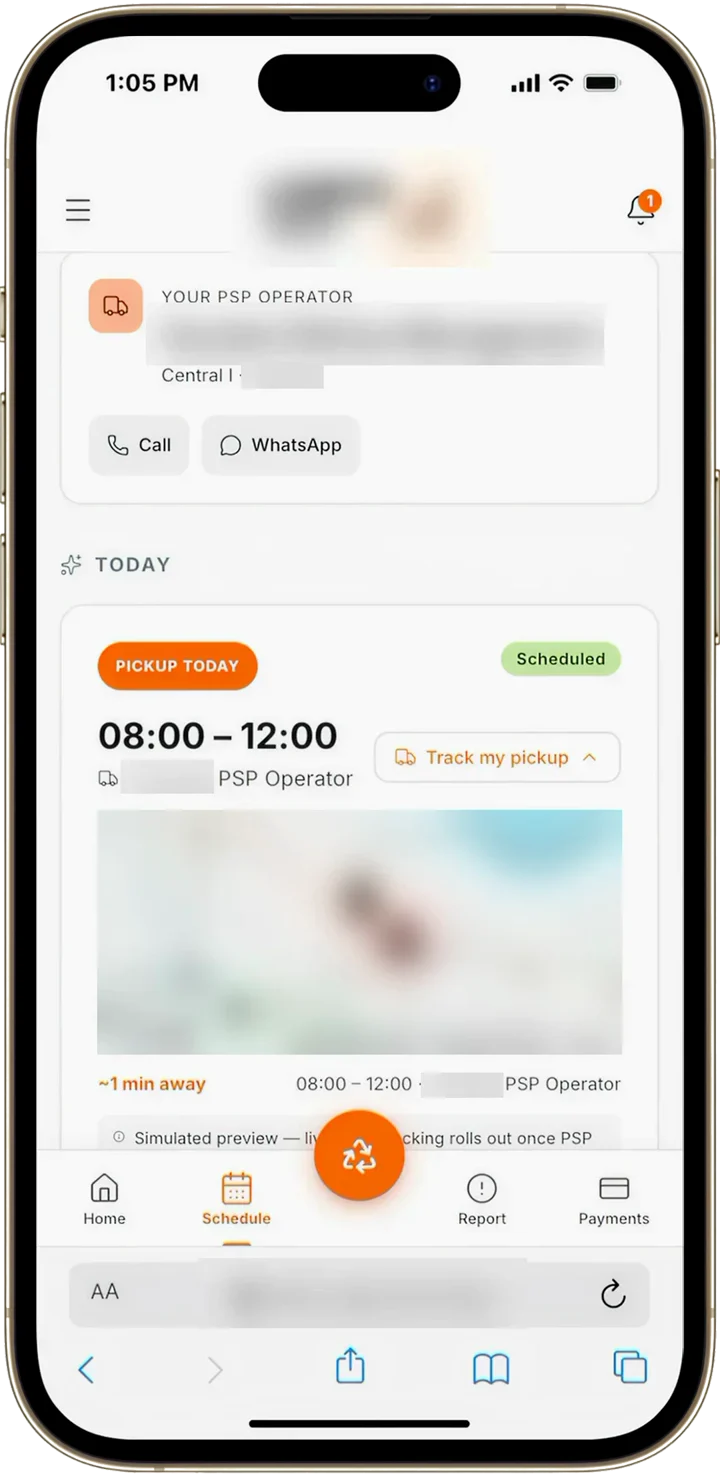
The assigned operator comes first, with Call and WhatsApp, so a resident can reach the people who collect from their street. The note under the map says it is a simulated preview. The operator’s name and the map are blurred here.
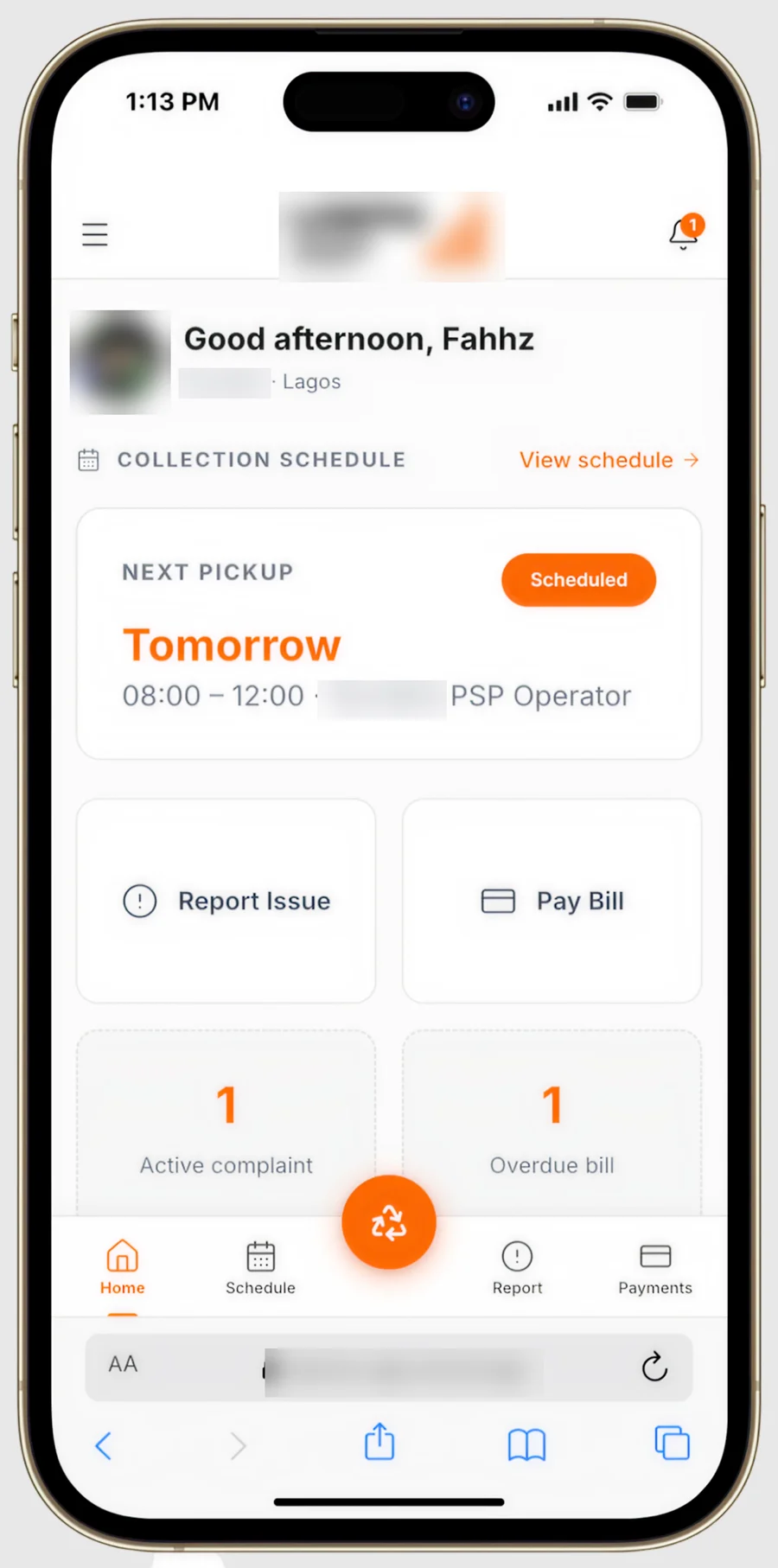
Every screen starts with what the resident needs today.
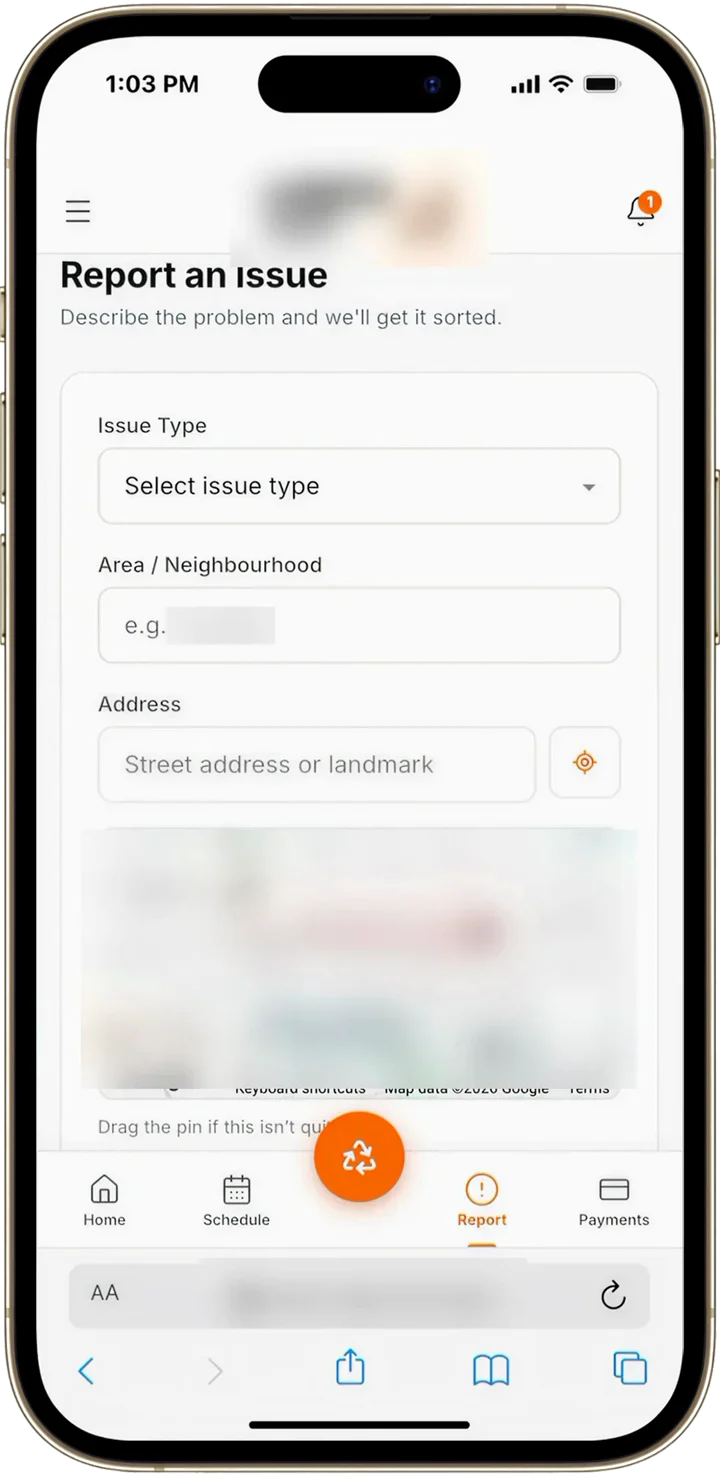
A report takes the phone’s location, then lets the resident drag the pin if it is wrong. The address field asks for a street or a landmark, and the pin settles the rest.
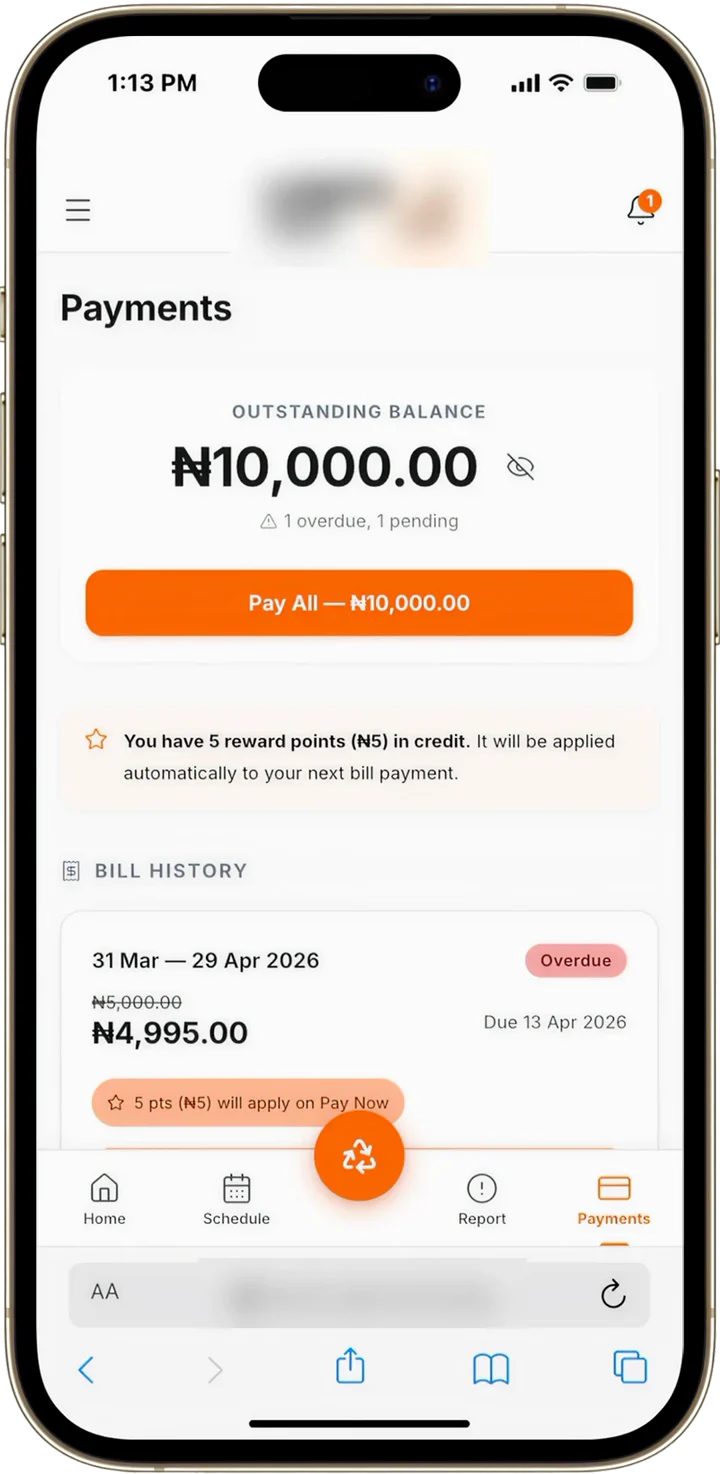
The balance and one Pay All button come first, and the bill history sits under them with each bill’s status. Payments are checked on the server before a bill is marked paid, so the receipt flow is real. For the pitch, payments ran in test mode.
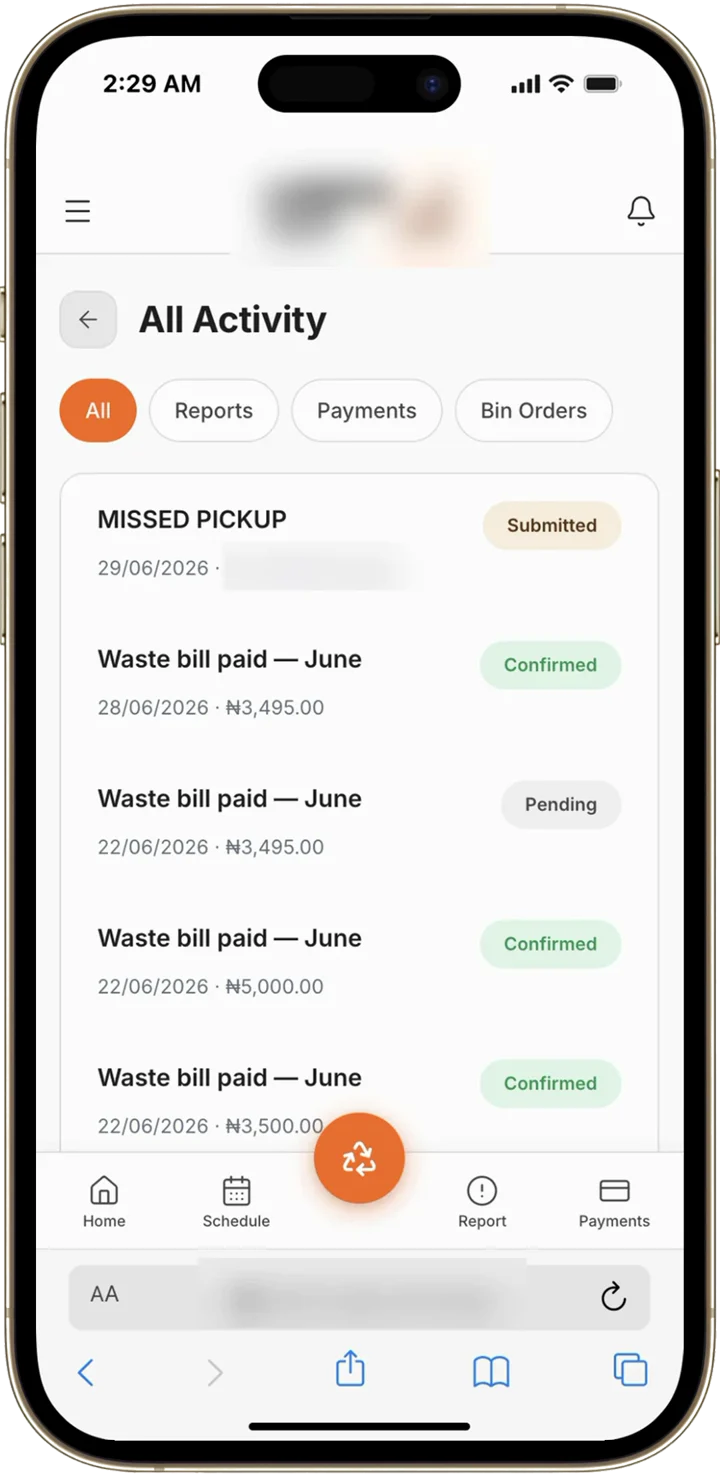
Reports, payments and bin orders share one activity list with a status on each, so a resident can show exactly what they reported and when. The street address is blurred here.
Recycling, with AI as the guide.
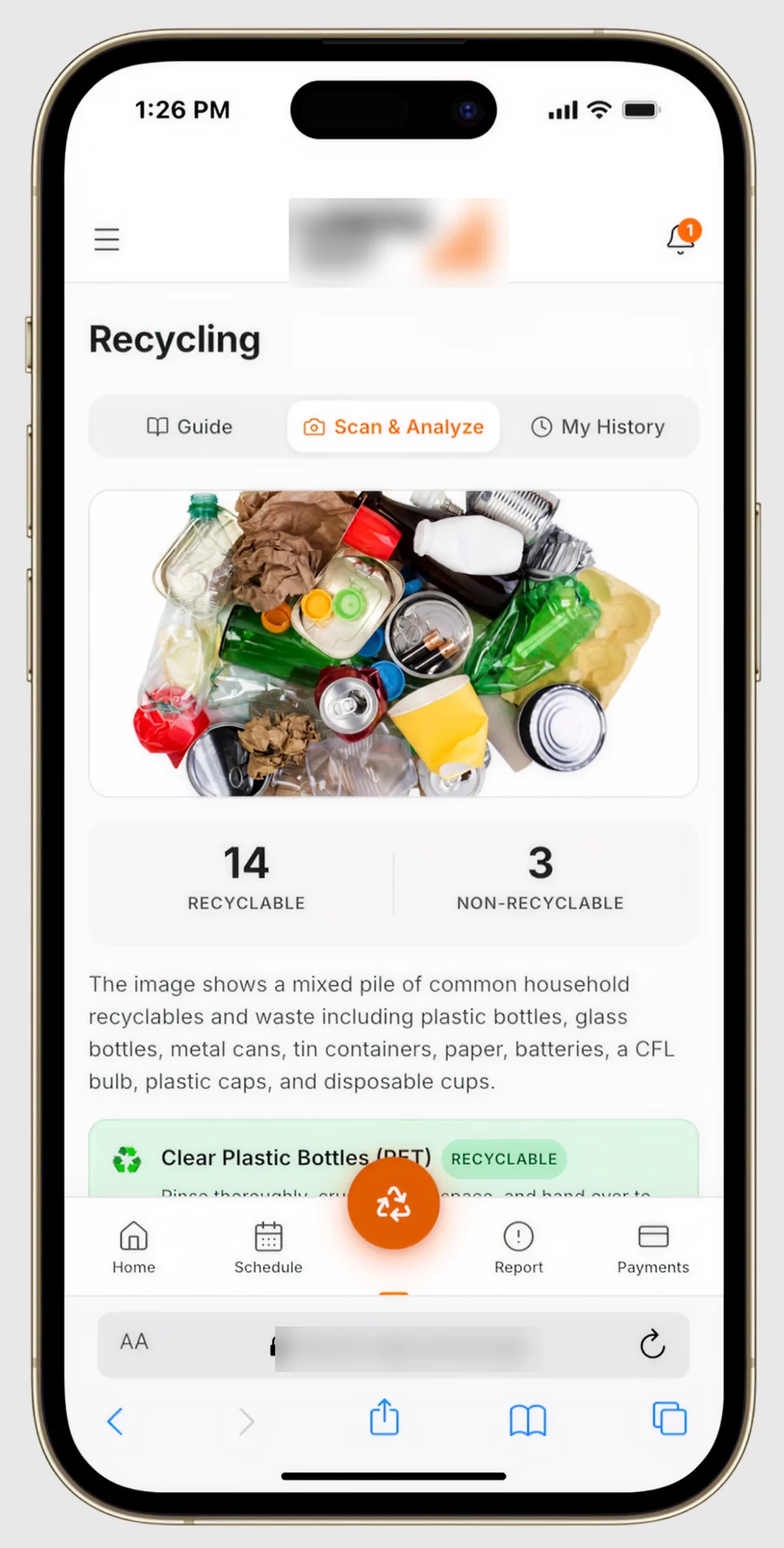
Our concept note found low recycling awareness in Lagos and no measure of how much waste gets recycled. So the app has a Recycling tab in three parts: a Guide, Scan and Analyze, and My History.
A resident takes a photo of their waste. The AI names what is in it, counts what can be recycled and what cannot, and labels each item with a short note on handling it, for example clear plastic bottles as recyclable. The result is the second phone on the cover of this page.
In the pitch we framed it as education only. It helps a resident learn what goes where; it does not sort, weigh or pay for anything. The demo ran on a stock photo of mixed household waste, not on a resident’s own bin.
Build noteMy co-founder wrote the code.
The app runs on Next.js with a PostgreSQL database and Flutterwave for payments. My co-founder wrote all of the code, working with AI coding agents.
What only the running app told us: the AI recycling scan depended on outside AI services. The provider changed three times, and in October one endpoint stopped answering altogether. The fix moved it to another provider and added a 45-second time limit with a plain error message.
What changed
We pitched in July. After the meeting, we were asked to think about community recycling centres that take in waste, register people, weigh it and give them incentives. In four days we built two modules for that: a check-in kiosk for community recycling centres and a weighing station for tricycle collectors, both crediting the resident’s bill rather than paying cash.
There is no contract yet and no real usage. If Sweep runs for real, I would measure missed pickups reported and resolved each week, and the share of bills paid in the app.
Looking back
Our own plan left out rewards, shopping and advanced AI, to keep the first version small. By the meeting, the app had all three: reward points, smart bin ordering and an AI recycling scan. Each one made the demo look bigger, and each one pulled time away from the three questions the app was for. With two more months I would cut back to the three questions from the start, and test them with residents on one street before anyone saw a slide.
Credits
My co-founder built the app and co-presented the pitch with me.